
Natural
History
Alexandra Park is much more than a historic Victorian park. Its 44 hectares (109 acres) contain a remarkable variety of habitats, making it one of the richest urban green spaces in East Sussex for wildlife.
The park stretches through a natural valley from the formal gardens in the south to ancient woodland and ghyll landscapes in the north. This changing landscape supports an impressive diversity of plants, trees, birds, insects and aquatic life throughout the year.
Natural History of Alexandra Park
Did you know?
🌳 Alexandra Park contains one of Britain's finest municipal arboretums, including 77 nationally recognised champion trees!
🌿 The cool, damp ghyll woodlands create a unique microclimate that supports mosses, liverworts and ferns rarely found elsewhere in south-east England.
🦋 More than just a Victorian park, Alexandra Park is an important wildlife corridor connecting habitats across Hastings.
💧 The park's ponds now use living plants and floating islands to help naturally filter and improve water quality.
🪵 Dead and decaying wood is a vital habitat, supporting fungi, insects and the birds that feed on them.
Trees
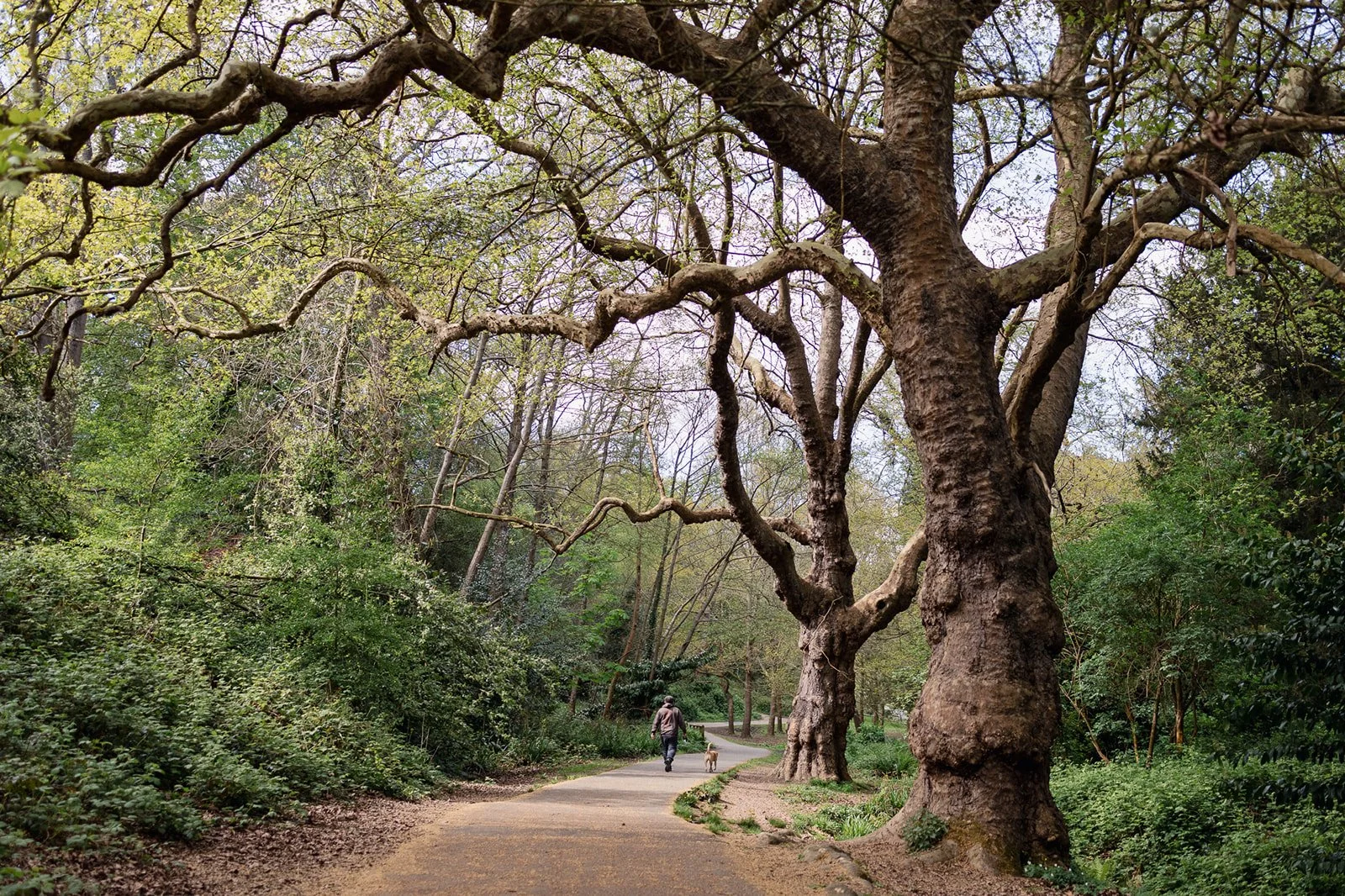
Alexandra Park is nationally recognised for its outstanding collection of trees. Robert Marnock's original planting scheme combined magnificent native species with carefully chosen ornamental trees from around the world.
Today the park is home to one of Britain's finest municipal arboretums and contains many champion trees, among the largest or finest examples of their species in the UK. Mature oaks, sweet chestnuts, cedars, beeches, redwoods, cypresses, pines and many unusual specimen trees make the park a destination for tree lovers throughout the seasons.
-
English Oak (Quercus robur)
Beech
Ash
Sweet Chestnut
Silver Birch
Alder
Field Maple
Hornbeam
Holly
Hazel
Goat Willow
-
Cedar of Lebanon
Giant Redwood (Wellingtonia)
Dawn Redwood
Monkey Puzzle
Atlas Cedar
Lawson Cypress
Tulip Tree
Handkerchief Tree
Ginkgo
Magnolia
Japanese Maple
(The park is recognised for its outstanding arboretum and contains several nationally important Champion Trees.)
Lakes, Ponds and Waterways
Water is one of Alexandra Park's defining natural features. Streams flowing from the northern ghyll woodlands feed a connected network of ponds, reservoirs and ornamental lakes before continuing underground towards Hastings seafront.
These waterways support fish, amphibians, dragonflies, damselflies, water beetles and a rich variety of aquatic plants. In recent years the park has become an excellent example of nature-based water management. Floating vegetated islands, marginal planting, natural filtration and improved stream habitats help clean the water while simultaneously creating valuable habitats for wildlife. This project has improved biodiversity within the park while also contributing to cleaner water flowing downstream.
-
Sticklebacks
Carp
Roach
Pond Skaters
Water Boatmen
Diving Beetles
Freshwater Shrimps
Water Snails
Birds
The park supports a rich variety of bird life throughout the year.
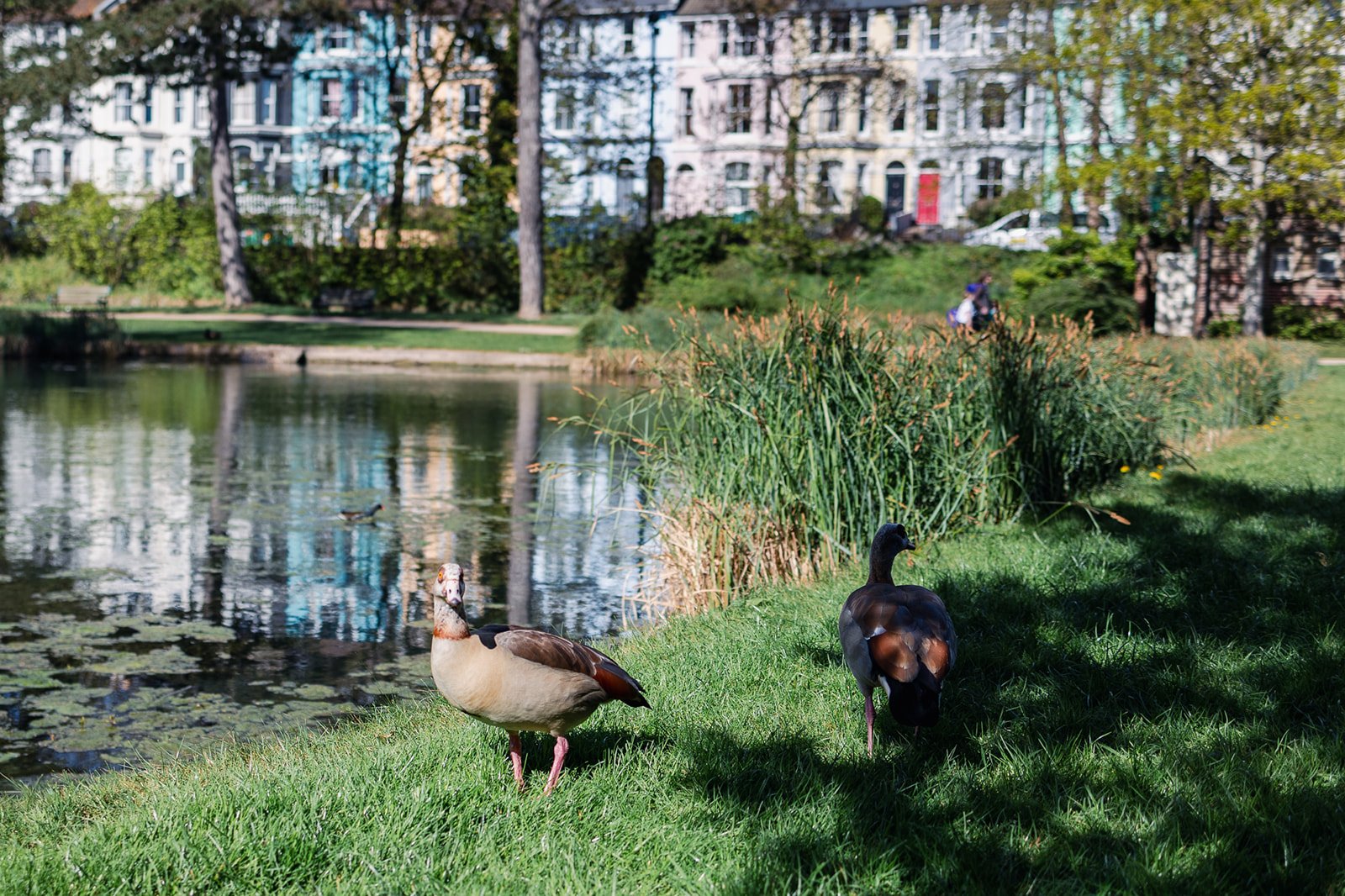
Resident species include mallards, moorhens, coots, grey wagtails, robins, wrens, nuthatches, great spotted woodpeckers and a wide range of tits and finches. Kingfishers may occasionally be seen along quieter stretches of water, while tawny owls and other woodland birds inhabit the northern woods. Egyptian Geese have also become familiar visitors to the park's lakes.
Spring and autumn bring migrating birds, making every visit slightly different.
-
Around the Lakes
Mallard
Moorhen
Coot
Canada Goose
Egyptian Goose
Grey Heron
Grey Wagtail
Kingfisher (occasionally)
Woodland Birds
Robin
Wren
Blackbird
Song Thrush
Great Tit
Blue Tit
Coal Tit
Long-tailed Tit
Nuthatch
Treecreeper
Great Spotted Woodpecker
Green Woodpecker
Jay
Carrion Crow
Magpie
Chaffinch
Goldfinch
Bullfinch
Tawny Owl
Summer Visitors
Chiffchaff
Blackcap
Willow Warbler
Swift (overhead)
Swallow
House Martin
Mammals
Grey squirrels are among the park's most familiar mammals, while foxes and several species of bat are regularly present, particularly at dusk. Although many mammals remain hidden during daylight hours, the woodland and watercourse habitats provide valuable shelter for a wide range of wildlife.
-
Grey Squirrel
Fox
Hedgehog
Wood Mouse
Bank Vole
Pipistrelle Bats
Noctule Bat
Daubenton's Bat (around water)
Insects and Other Wildlife
From early spring until autumn the park is alive with insects. Bees, butterflies, hoverflies and other pollinators depend on flowering shrubs, meadow plants and ornamental borders.
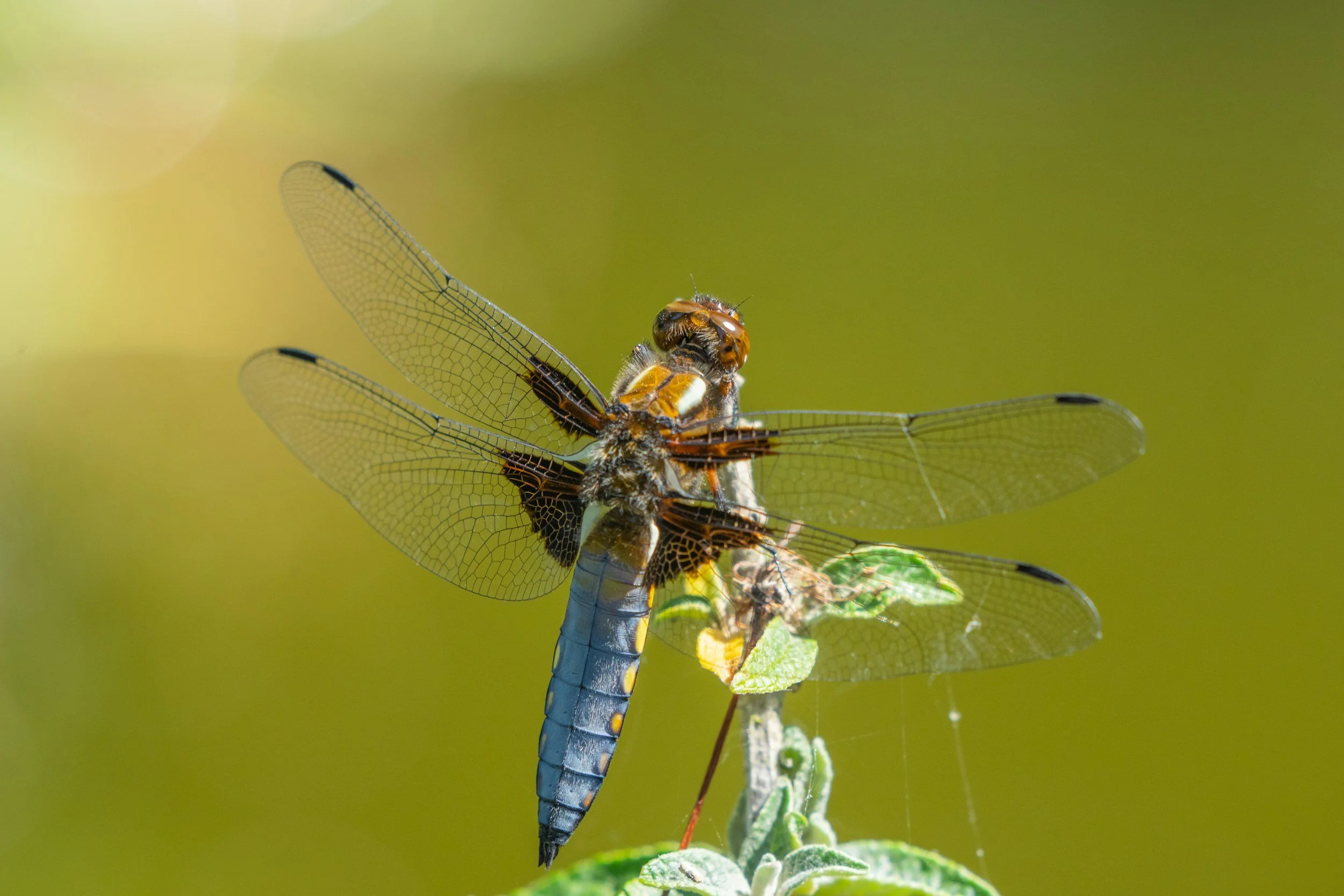
Dragonflies and damselflies patrol the ponds during summer, while woodland paths provide opportunities to discover fungi, lichens and a fascinating variety of insects and other invertebrates.
-
Likely species include:
Peacock
Small Tortoiseshell
Red Admiral
Comma
Speckled Wood
Holly Blue
Common Blue
Meadow Brown
Gatekeeper
Ringlet
Small White
Large White
Orange-tip (spring)
Brimstone
-
Buff-tailed Bumblebee
White-tailed Bumblebee
Red-tailed Bumblebee
Common Carder Bee
Honey Bee
Tawny Mining Bee
Red Mason Bee
Plus many hoverflies and solitary bees.
-
Broad-bodied Chaser
Emperor Dragonfly
Southern Hawker
Common Darter
Four-spotted Chaser
Damselflies
Common Blue
Azure
Blue-tailed
Large Red
-
Seven-spot Ladybird
Harlequin Ladybird
Stag Beetle (occasionally)
Devil's Coach Horse
Garden Snail
Roman Snail (possible)
Common Green Shieldbug
Garden Spider
A Living Landscape
Alexandra Park continues to evolve. Careful woodland management, habitat restoration and sensitive planting help maintain a balance between recreation, heritage and nature conservation.
Every season brings something different; from spring blossom and nesting birds, through summer dragonflies and colourful borders, to autumn fungi and spectacular tree colour before the quiet beauty of winter.
Whether you visit to enjoy the gardens, explore the woodland paths or simply watch wildlife by the water, Alexandra Park remains one of Hastings' most important places for both people and nature.
Biodiversity
Although Alexandra Park is a much-loved public park, it also forms an important wildlife corridor through the centre of Hastings. The combination of ancient woodland, streams, ponds, open grassland, ornamental gardens and mature trees creates a mosaic of habitats that supports wildlife throughout the year.
From woodland fungi and tiny mosses to bats, birds and pollinating insects, every habitat contributes to the park's remarkable biodiversity. Careful management aims to conserve these habitats while ensuring the park remains welcoming for everyone to enjoy.
-
Common Frog
Common Toad
Smooth Newt
Woodlands and Ghylls
The northern end of the park includes Old Roar Gill Local Nature Reserve together with Shornden Wood, Newgate Wood and Coronation Wood. These ancient woodland habitats are part of the distinctive High Weald landscape and are characterised by steep-sided ghylls, streams, sandstone outcrops and cool, shaded conditions.
These sheltered valleys create their own humid microclimate, allowing mosses, liverworts, ferns and woodland fungi to flourish. Some of these plants are uncommon in south-east England and are particularly associated with ancient ghyll woodland. Fallen trees and standing dead wood are left where safe to do so, providing essential habitat for fungi, beetles and countless other woodland invertebrates that form the foundation of a healthy woodland ecosystem.
-
Male Fern
Lady Fern
Hart's-tongue Fern
Broad Buckler Fern
Soft Shield Fern
Mosses
Liverworts
Lichens
-
Spring
Bluebell
Wood Anemone
Lesser Celandine
Primrose
Dog Violet
Ramsons (Wild Garlic)
Summer
Oxeye Daisy
Red Campion
Hedge Woundwort
Meadowsweet
Common Knapweed
Bird's-foot Trefoil
Self-heal
Autumn
Ivy flowers (important for insects)
Ivy berries
Bramble
-
Autumn is particularly rewarding.
Common species include:
Turkey Tail
Artist's Bracket
King Alfred's Cakes
Sulphur Tuft
Birch Polypore
Oyster Mushroom
Fly Agaric (occasionally)
Park Ranger Information
Blue-Green Algae
Blue-green algae (cyanobacteria) occur naturally in many lakes, ponds and slow-moving waterways throughout the UK. They have been present in Alexandra Park's Shornden waterways for many years, and there has been no evidence of harmful effects on the park's wildlife.
However, blue-green algae can be harmful to people and especially to dogs if they come into contact with affected water or swallow it. Exposure can cause stomach upsets, flu-like symptoms and, in some cases, more serious illness.
The Park Rangers regularly monitor the park's waterways. If significant blooms are detected, the Environment Agency is informed and warning signs are displayed to advise visitors of the potential risk.
Because all of Alexandra Park's ponds and waterways are connected, treating blue-green algae is extremely difficult and may not be practical. When a bloom occurs it is usually easy to recognise, appearing as a bright, almost luminous green film across the surface of the water.
Please do not allow dogs or children to enter water where warning signs are displayed.
Seasonal Highlights
SUMMER
Dragonflies
Butterfies
Wildflowers
Young birds
SPRING
Bluebells
Nesting birds
Blossom
Frogspawn
WINTER
Winter Thrushes
Woodpeckers
Tree Structure
Mosses & Lichens
AUTUMN
Fungi
Autiumn Colour
Migrating birds
Acorn & Fungi